| Number of Devices # | Processing Time (s) | Throughput (requests/s) |
|---|---|---|
| 150 | 60 | 160 |
| 200 | 85 | 140 |
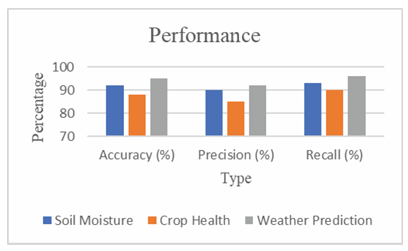
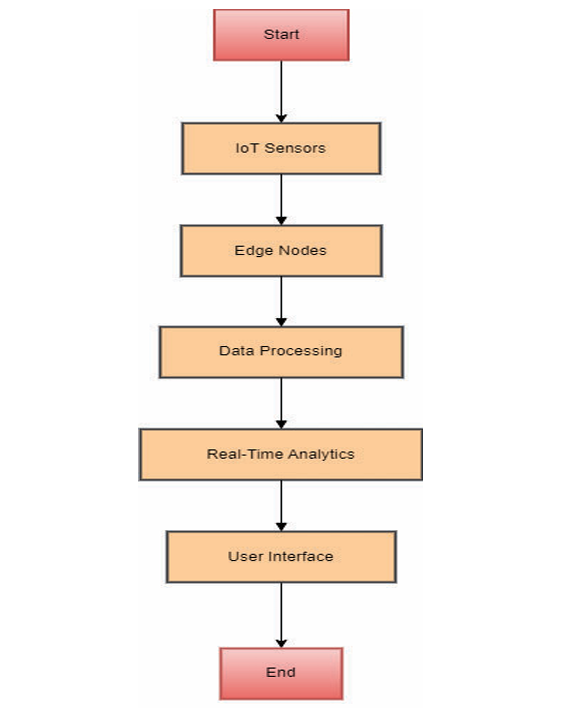
IoT and edge computing can be combined to improve precision agriculture. The main problem is that farms generate a huge amounts of data from sensors like moisture meters, weather monitors, and crop health cameras, and sending all that data to the cloud creates delays and bandwidth issues. Architecture processes most of the data at edge nodes located near the fields, which reduces latency and improves real-time decision-making (like irrigation timing). Tests of the system using real agricultural datasets found that it handles scaling pretty well, up to 200 devices, while keeping latency reasonably low. Insight accuracy for things like crop health and soil moisture was also pretty high.
| Number of Devices # | Processing Time (s) | Throughput (requests/s) |
|---|---|---|
| 150 | 60 | 160 |
| 200 | 85 | 140 |
P. V. Rao, N. Varshney, N. K. Sundaram, B. Kishore, S. O. Husain and N. Kanys,
"Developing a Scalable IoT Architecture for Precision Agriculture Using Edge Computing,"
2024 International Conference on IoT, Communication and Automation Technology (ICICAT), Gorakhpur, India, 2024,
pp. 976–980, doi: 10.1109/ICICAT62666.2024.10923487.